New Dimension Golf
What if better golf isn't only about improving your swing — but about accessing more of your best golf, more often?
New Dimension Golf helps you recognise when you are Green, when you begin to leave it, and how to spend more of your round playing from the state in which your golf works best.
Whatever your goal is
Your goal may be completely different from the golfer standing beside you. But the starting point is the same:
You need access to your game. More Green first.
The evidence
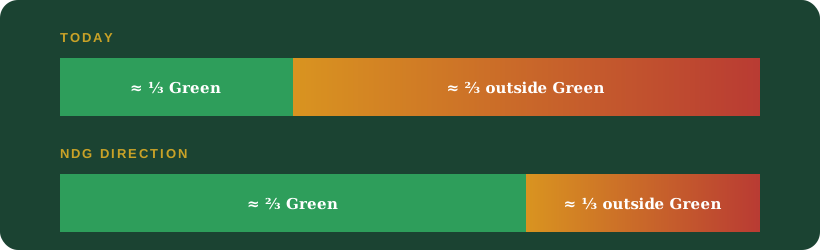
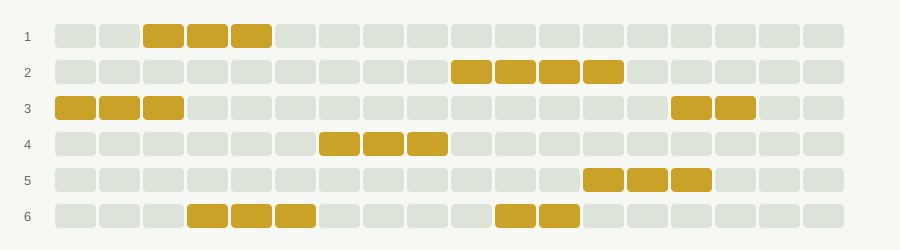
Experience with golfers suggests many spend, on average, no more than around one third of a round in Green. For higher-handicap golfers, that proportion can be even lower.
Think about your last few rounds. There were probably a number of holes where your golf felt good — not perfect, simply satisfying. You were calm, focused and clear. And then something changed.
The important question is no longer only how well can you play — it is also how often can you access that game?
The good golf is already there. The question is how often you can access it.
What Green actually means
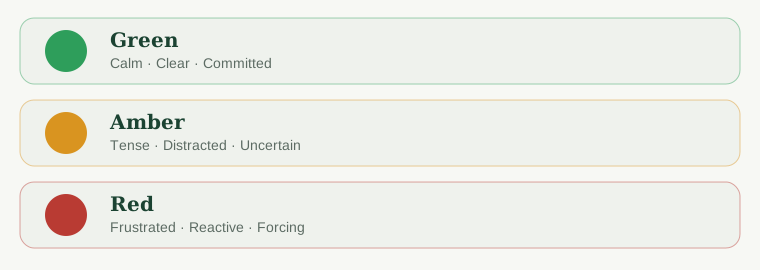
It means being sufficiently calm, focused and clear to play within your capabilities, accept what happens and commit to the shot in front of you. You can hit a poor shot and still be Green. And you can make a birdie, become overly excited or expectant, and leave Green before the next tee shot.
Green describes the golfer, not the score.
The fundamental opportunity
For many golfers — particularly those who have played for years — the swing is already well established. Technical improvement is possible, but real change can demand considerable time and effort. There is another opportunity: access more of what you already have, more often.
You don't need to become twice as technically good. The question is: what if you could access more of your best golf, twice as often?
Not perfection. More access. More often. More Green.
What could change
Fewer stretches where rushing, frustration or poor decisions let one mistake become several.
Less unnecessary tension and self-criticism — a freer body, clearer mind and less exhausting round.
Spend more time experiencing the game rather than battling it.
Calmer and clearer, you can observe what is happening, learn from it and make technical changes more effectively.
Especially as you get older — use what you already have more efficiently rather than continually rebuilding your swing.
Recognise pressure earlier, manage your response and give yourself a better chance of committing to the next shot.
Start with your next round
You don't have to stop playing golf first, and you don't have to spend months learning a new technique.
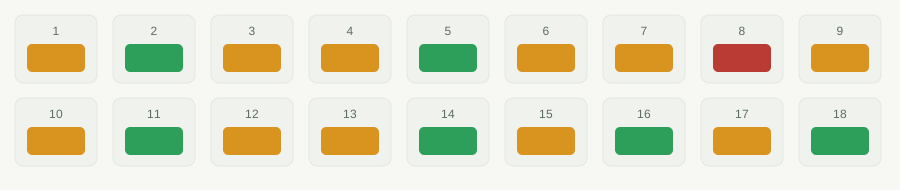
At the end of every hole, take about three seconds and ask yourself: was I Green, Amber or Red? Eighteen holes, eighteen observations — and something that was previously invisible starts to become visible.
Two or three seconds at the end of each hole. That's all.
Go deeper

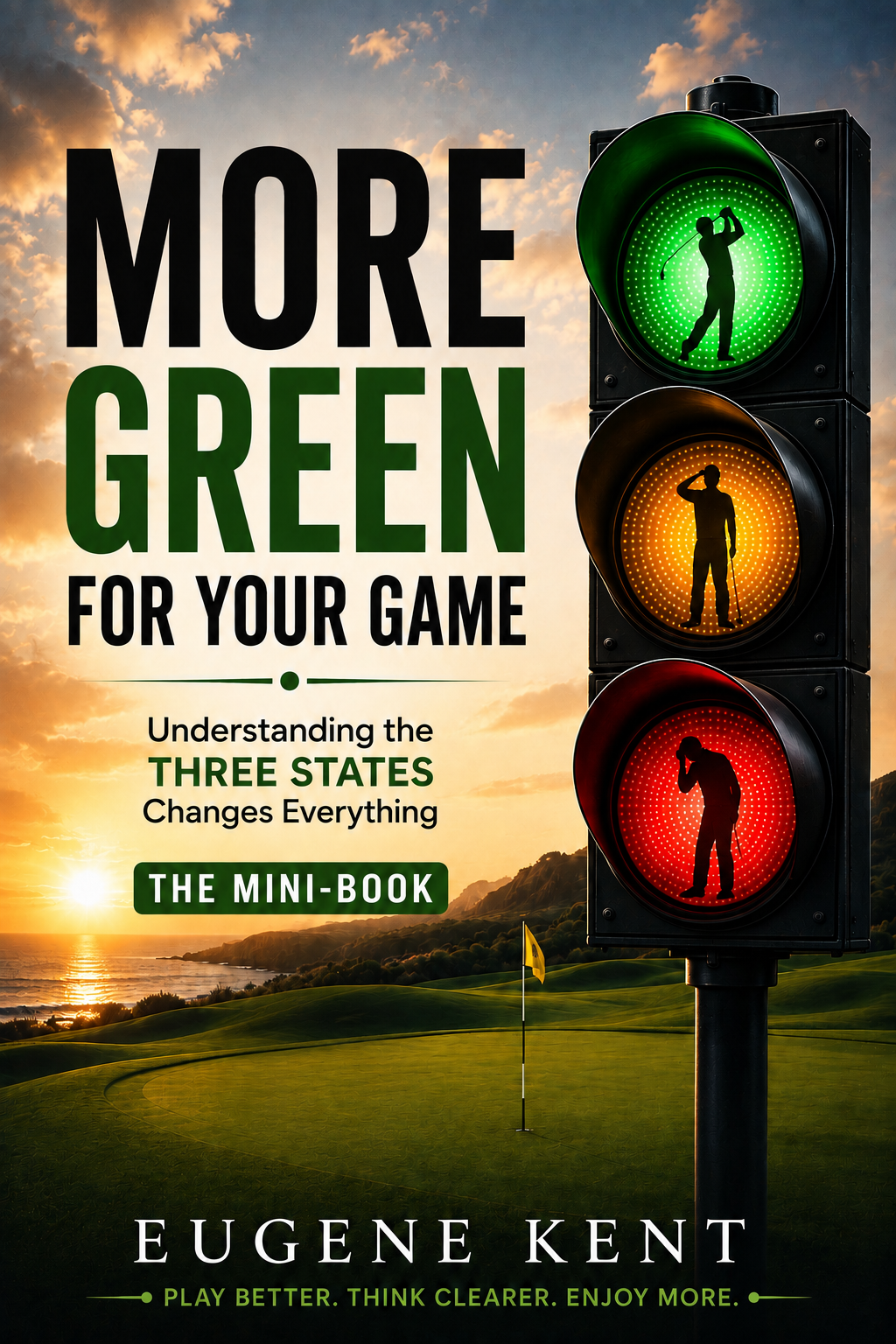
If you discover that you're playing from Green for only around a third of your round — or less — this mini-book is a simple place to start. It introduces the Green–Amber–Red framework and helps you recognise the patterns that influence your own game.
Start by noticing. Your next round is enough.
Why New Dimension Golf
“My swing hadn’t disappeared. So what had?”
I wasn’t looking for another mental golf system. I was trying to understand something that kept happening in my own game.
I could play three or four holes where everything felt easy, clear and under control — and then, sometimes almost without warning, become a completely different golfer.
My swing hadn’t disappeared. My ability hadn’t changed. So what had?
That question stayed with me.
After more than 30 years working in technology and project management, I was used to looking for patterns and reducing complicated problems to something practical. Eventually I started doing the same with my golf.
That became New Dimension Golf.
Not a promise of perfect golf. Not another complicated mental routine. Just a practical way of recognising when you have the best access to your golf, when you begin to leave it — and how to spend more of your round in Green.
I’m interested in helping golfers access more of their best golf, more often.
Want some help?
Start with your next round, take three seconds at the end of each hole and begin recognising your own patterns.
If you'd rather shorten that learning curve, I'm very happy to help directly. An outside pair of eyes can often see changes in rhythm, behaviour, tension or decision-making long before they become obvious to the golfer themselves.
Last thing
You need more access to your best golf.
More Green. More often.